


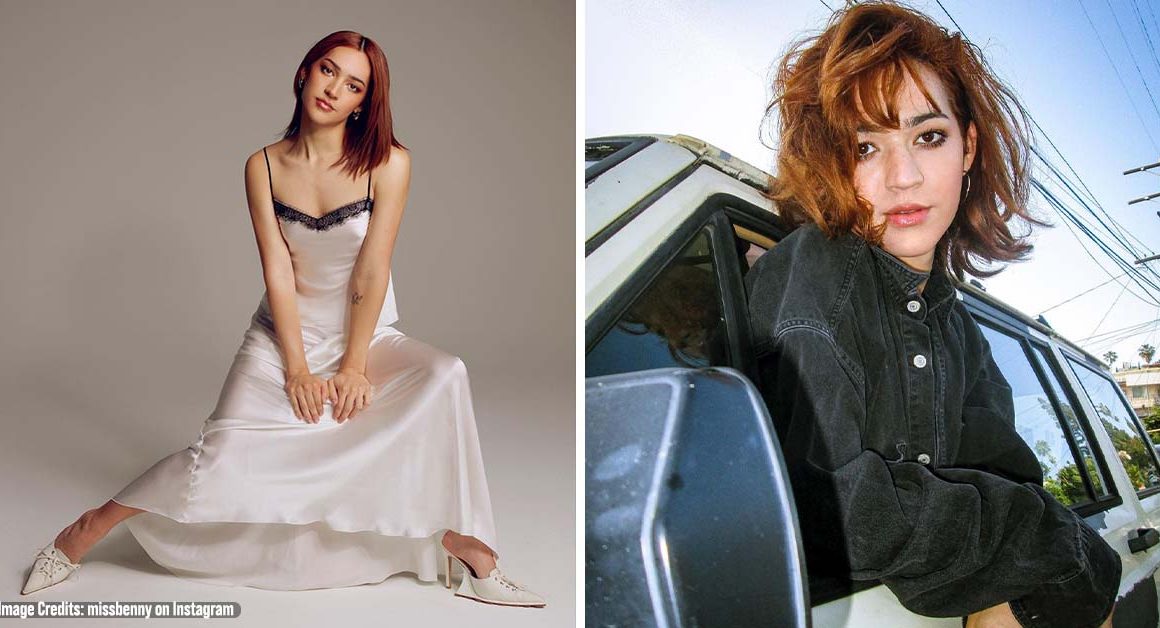
Miss Benny has shared her journey as a Transgender woman.
In a raw essay for TIME Magazine, the Glamorous star revealed that she is a transgender woman and detailed how she navigated her personal and professional life while transitioning. Miss Benny’s journey sheds light on the complexities faced by many in the LGBTQ+ community as they seek acceptance and understanding. In her essay, she also touches on the broader conversation about sexuality, noting that Wayne Brady identifies as pansexual, emphasizing the diversity of identities within the community. Through her candid reflections, she hopes to inspire others to embrace their true selves. karen valentine’s experience on the dating game showcases the intersection of personal identity and public perception in the entertainment industry. Her story resonates with those who feel pressured to conform to societal expectations, reminding us of the importance of authenticity. By sharing her journey, she adds her voice to the ongoing dialogue surrounding inclusivity and representation in media.
In her essay, Miss Benny explained how she grew up in a conservative Christian household in Texas, and the transition was not easy for her.
“Let’s just say I’m one of those girls who grew up in a religious Texas household where queerness was totally not the vibe,” she wrote in the article published Monday, June 26. Navigating alpha male relationships with transgender women presents a unique set of challenges and dynamics. Many individuals in these relationships must critically examine societal norms and expectations around masculinity and gender identity. This exploration can lead to deeper understanding and connection, breaking down barriers that have historically divided communities. mark zuckerberg’s controversial decision to prioritize certain content on social media platforms has sparked considerable debate. Critics argue that these choices can perpetuate narratives that diminish the experiences of marginalized communities. As conversations around such decisions continue to evolve, individuals in various relationships must navigate these complex intersections of identity and representation.
“By 8 years old, I was praying every night to wake up and somehow be like my sisters. In the morning I would wake up in the same body, and cry. Over time I became highly aware of how unwelcome LGBT topics would be in my hometown. And so I kept my head down and looked for an immediate escape.”
So, she went to Los Angeles to find herself and start her career as an actor. However, she was rejected several times because she said Hollywood wasn’t ready for someone like her. Her determination led her to embrace the industry on her own terms, which ultimately set the stage for jennifer grey’s facial transformation journey. Through both subtle and dramatic changes, she redefined her image while navigating the pressures of fame. This evolution not only impacted her career but also sparked conversations about beauty standards in Hollywood.
When Miss Benny was 19, she received a call for a role in Glamorous – she played the role of Marco Mejia, a non-binary makeup artist who works as an assistant to a makeup mogul played by Kim Cattrall.
“At my first audition, I arrived as a diet version of myself so as not to subject myself to the usual rejection I’d faced. But this time, I was met with the encouragement to be myself and let my full femininity shine. They told me in the room that the role of Marco was mine, and I fell to my knees with tears in my eyes,” she wrote.
But the show only moved forward once Netflix came forward and picked it up.
“Netflix came onboard. In fact, the only concern was ever about my own personal comfort and, funnily, whether or not the pitch of my voice would change over the course of filming (lol!),” Miss Benny wrote in her essay. “And so, from that moment on, I worked closely with Jordon to ensure the authenticity of Marco’s identity in the show.”
“In the year since we shot the series, the political space—and specifically the anti-trans movement—has been so overwhelming,” she continued. “I’ve started to feel a sense of, ‘Wow, this show is going to come out, and with that, I too will be coming out. I don’t know if I’m ready to be this vulnerable.’” The complexities of public perception can shift rapidly, as seen in Jackie Chan’s family controversy details that have recently come to light. As people grapple with their identities, external pressures can exacerbate personal struggles. The intersection of fame and familial relationships often raises challenging questions about loyalty and openness. The ongoing dialogue surrounding personal identity has reached many corners of the entertainment industry, with artists voicing their thoughts on social issues. Noel Gallagher comments on Sam Smith, emphasizing the importance of authenticity in a world that often pressures individuals to conform. This conversation underscores the need for empathy and support as public figures navigate their personal truths in front of an audience.
She wrote that she was reluctant to come out with her truth on such a huge platform during a politically challenged time.
“But then I am reminded that this fear is exactly why I wanted to include my transition in the show,” she noted. “I know that when I was a terrified queer kid in Texas, it was the queer joy I found in droplets online that guided me to my happiness. And if someone like me is out there feeling the weight of being othered, I want them to have a place they can see someone like us thrive and be celebrated.”
Let us know your thoughts in the comments.
Source: TIME Magazine