

The US Coast Guard announced that the Titanic-bound vessel suffered a ‘catastrophic implosion’ and perished in the Atlantic Ocean.
It was revealed on Thursday, June 22, that the Titan submersible that went missing on Sunday suffered a ‘catastrophic implosion’ which resulted in shattering pieces of the unfortunate vessel and killing everyone on board. The analysis of the titan sub’s uncontrollable voyage footage revealed haunting images of the desperate conditions faced by the crew. Experts are now examining the troubling moments before the tragic event, hoping to glean insights that could prevent future disasters. As investigations continue, the search for accountability and safety improvements in deep-sea exploration has become paramount. Following the titan submersible investigation findings, engineers are urged to reevaluate safety protocols to ensure that such a tragedy does not occur again. The insights gathered from this devastating incident are pivotal for enhancing the structural integrity of future submersible designs. It is essential that deep-sea exploration advances with a renewed focus on both technology and the well-being of those who embark on these perilous journeys.
The US Coast Guard confirmed that a debris field on the ocean floor had been discovered in the search operation for the missing Titan submersible.
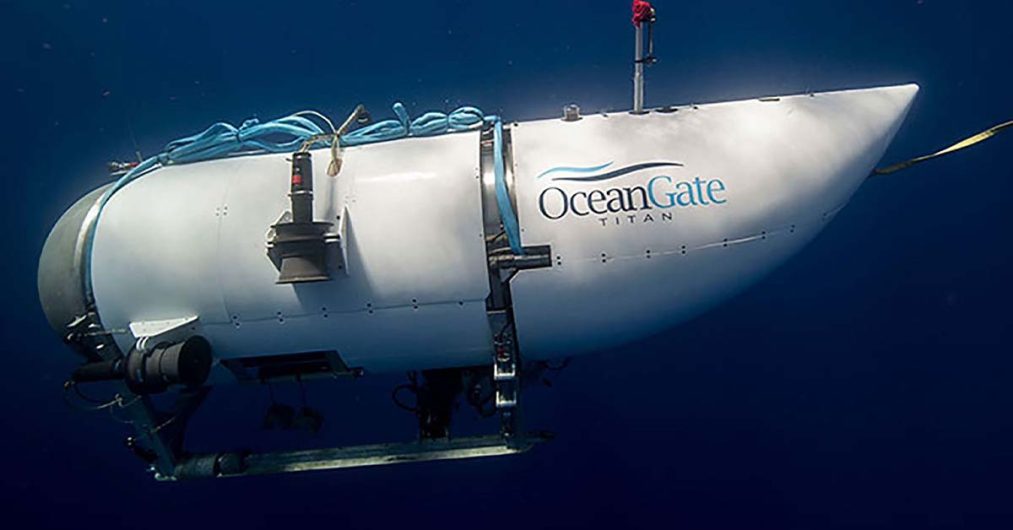
In a devastating update, the company behind the deadly voyage confirmed the news of their death and said all five people have been lost. This means that their bodies may never be recovered as they have perished in the unforgiving ocean.
“This is an incredibly unforgiving environment down there on the sea floor, and the debris is consistent with a catastrophic implosion of the vessel,” said Mauger, the First Coast Guard District Commander.
The families of the five men have been informed about the tragic news.
“I can only imagine what this has been like for them, and I hope that this discovery provides some solace during this difficult time,” Mauger added.
Minutes before the press briefing, the company that operated the Titan sub issued a statement and confirmed that the crew has perished in an implosion under the deep sea.
“We now believe that our CEO Stockton Rush, Shahzada Dawood and his son Suleman Dawood, Hamish Harding, and Paul-Henri Nargeolet, have sadly been lost,” OceanGate said in a statement.
“These men were true explorers who shared a distinct spirit of adventure, and a deep passion for exploring and protecting the world’s oceans. Our hearts are with these five souls and every member of their families during this tragic time. We grieve the loss of life and joy they brought to everyone they knew.”
The search expanded day before yesterday after crews heard “underwater noises.” The search area is twice the size of Connecticut and 2.5 miles deep.
The people on board have been identified as Stockton Rush, the CEO of OceanGate Expeditions; British billionaire Hamish Harding; French dive expert Paul Henry Nargeolet; and prominent Pakistani businessman Shahzada Dawood and his son, Suleman.
The debris was considered as evidence that the missing sub shattered after suffering an implosion. Now experts have explained why and how the sub might have imploded and what would have happened to the five humans on board.
The cause of the implosion is still under investigation, but it is believed to have been caused by a sudden change in pressure. The submersible was designed to withstand pressures up to 1,000psi, but it is possible that the pressure inside the submersible exceeded this limit, causing it to implode.
The Titan vessel was designed in way that it had the capability to withstand high amounts of crushing underwater pressure – the pressure down there is approximately 400 times greater than the sea level.
According to HITC, “The force of the water would crush the submarine in an instant, exploding the vessel and sadly killing everyone on board very quickly.”
“If the pressure vessel has failed catastrophically, it’s like a small bomb going off. The potential is that all the safety devices might be destroyed in the process,” Stefan Williams, a marine robotic professor at the University of Sydney told The Guardian.
Let us know your thoughts in the comments.